Watering trees sounds simple until you live in the East Bay.
Between heavy clay soils, long dry summers, inconsistent rainfall, and changing watering restrictions, many property owners end up either giving trees too much water or not enough. The tricky part is that both problems can produce similar symptoms.
Yellow leaves, thinning canopies, leaf drop, and poor growth can all point to watering issues. The challenge is figuring out which direction the problem is going.
In places like Pittsburg, Walnut Creek, Concord, Brentwood, and throughout Contra Costa County, improper watering is one of the most common contributors to tree stress we see during the warmer months.
Why Watering Trees Is Tricky in the East Bay
East Bay soils hold moisture longer than many people realize.
Large portions of Contra Costa County have dense clay soils that drain slowly. While the surface may look dry, deeper soil layers can stay saturated for days after irrigation. That often leads homeowners to keep watering when the root zone is already holding too much moisture.
At the same time, years of drought messaging have caused many people to under-water mature trees out of concern for conservation.
The result is a region where both overwatering and underwatering are common.
Tree watering also depends on several factors:
- Tree species
- Tree age and size
- Sun exposure
- Soil conditions
- Slope and drainage
- Time of year
A newly planted tree in full sun needs a very different watering schedule than a mature coast live oak growing in compacted clay soil.
Signs You May Be Overwatering Your Trees
Many people assume more water equals healthier trees. In reality, excess water can suffocate roots and create serious long-term stress.
Common Signs of Overwatering
Yellow Leaves With Soft Growth
Overwatered trees often develop pale or yellowing foliage along with soft, weak new growth. Leaves may appear limp instead of dry and brittle.
Constantly Wet or Mushy Soil
If the soil around the tree stays damp for long periods, especially several inches below the surface, the roots may not be getting enough oxygen.
Poor drainage is a major issue in East Bay clay soils.
Root Stress and Root Rot Risk
Roots need oxygen to function properly. Saturated soils can lead to declining root systems, fungal problems, and early root rot development.
In some cases, overwatered trees begin thinning because the damaged roots can no longer support the canopy.
Trees Commonly Affected by Overwatering
Some species are especially sensitive to excessive moisture, including:
- Coast live oaks
- Valley oaks
- Mature pines
- Certain eucalyptus species
Oak trees in particular prefer deep, infrequent watering and can struggle when irrigation stays too close to the trunk or runs too frequently.
Signs Your Trees May Be Underwatered
Underwatering symptoms tend to become more noticeable during late spring and summer as temperatures rise and soils dry out.
Common Signs of Underwatering
Wilting or Crispy Leaf Edges
Leaves may curl, brown at the edges, or feel dry and brittle. This is especially common during heat waves or extended dry periods.
Premature Leaf Drop
Trees under drought stress often shed leaves early to conserve moisture.
This can happen even when the tree is still alive and trying to protect itself.
Thinning Canopy
Sparse foliage or dieback in the upper canopy is a common sign that the root system is struggling to supply enough moisture to support the tree.
This is something we frequently see in drought-stressed trees throughout the East Bay.
How to Water Trees Correctly
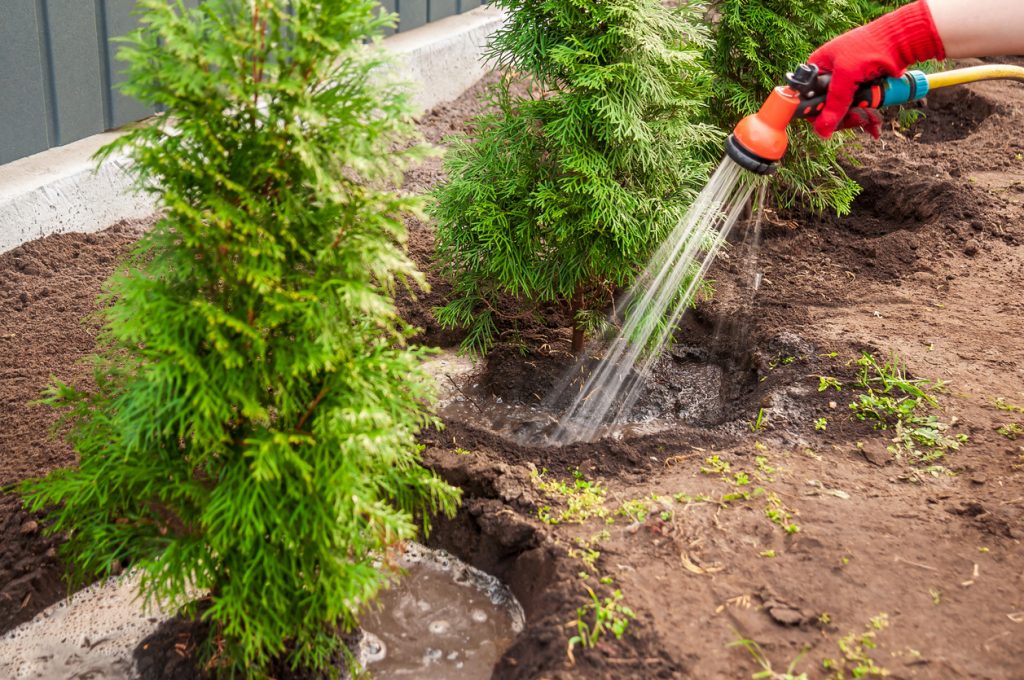
For most established trees, deep and infrequent watering is better than shallow daily irrigation.
The goal is to encourage deeper root growth and maintain healthy soil oxygen levels.
General Watering Guidelines
Water Deeply
Water should penetrate well below the surface into the root zone.
Shallow watering encourages surface roots, which dry out faster and create weaker trees over time.
Water Less Frequently
Most mature trees benefit more from occasional deep soakings than frequent light watering.
Clay soils already retain moisture longer, so daily irrigation is often unnecessary.
Adjust for Tree Size
Larger mature trees require wider watering zones and more total water than younger trees.
The root zone usually extends far beyond the trunk.
Consider Sun and Exposure
Trees planted in:
- Full afternoon sun
- Reflective heat areas
- Slopes
- Compacted soils
may require more attention during hot East Bay summers.
Common Tree Watering Mistakes
Frequent Shallow Watering
This is one of the most common mistakes we see.
Short irrigation cycles often wet only the top few inches of soil while deeper roots remain dry.
Treating Trees Like Lawns
Trees and turfgrass have very different watering needs.
Lawn irrigation systems are rarely ideal for mature trees, especially oaks and drought-adapted species.
Ignoring Tree Age
Young trees need more regular establishment watering.
Mature trees generally need deeper, less frequent watering schedules.
Applying the same irrigation approach to every tree can create problems quickly.
Watering Against the Trunk
Water concentrated near the base of the trunk can increase disease and decay risks.
Water should typically be distributed throughout the root zone, not directly against the trunk flare.
When to Have an Arborist Evaluate Your Trees
Watering symptoms can overlap with:
- Soil compaction
- Root damage
- Pest activity
- Disease issues
- Nutrient deficiencies
That’s why a professional inspection matters when symptoms continue to worsen.
At Evergreen Tree Care, our ISA Certified Arborists evaluate the full picture, including soil conditions, species needs, drainage issues, and drought stress patterns common throughout the East Bay. We focus on long-term tree health and practical solutions that fit your property and environment.
FAQ
How often should I water mature trees in the East Bay?
It depends on the species, soil, and weather conditions, but most mature trees benefit from deep, infrequent watering rather than daily irrigation.
Can overwatering kill a tree?
Yes. Chronic overwatering can damage roots, reduce oxygen in the soil, and lead to decline over time.
Why are my tree leaves turning yellow even though I water regularly?
Yellow leaves can result from both overwatering and underwatering. Soil conditions, drainage, and root health all play a role.
Are clay soils bad for trees?
Not necessarily, but clay soils drain slowly and require careful watering management to avoid saturation and compaction problems.
Should lawn sprinklers water my trees?
Usually not by themselves. Lawn irrigation often provides shallow watering that may not adequately support mature tree root systems.
Protect Your Trees With Proper Watering Practices
Proper watering is one of the most important parts of long-term tree health in the East Bay. Small adjustments can make a major difference in helping trees handle drought stress, summer heat, and poor soil conditions.
Call us today at 925-825-8165 to schedule your consultation or learn more about professional tree care and Plant Health Care services throughout Contra Costa County.