
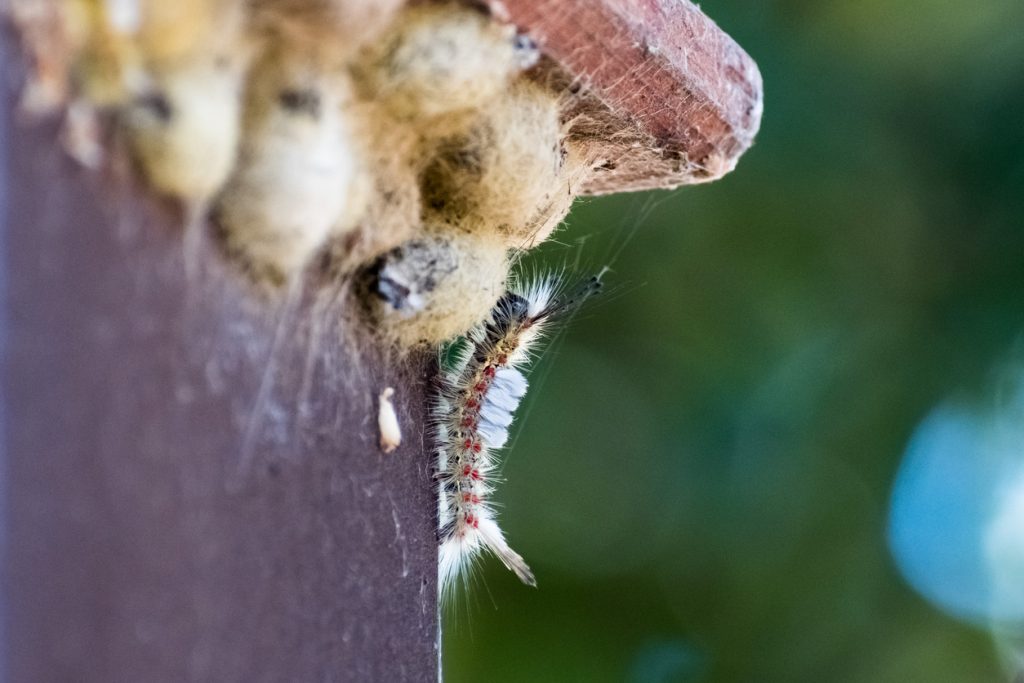
If you’ve seen fuzzy caterpillars on your trees or noticed an unexplained itchy rash after spending time outside, you may be dealing with Western tussock moths.
This pest shows up across the Bay Area and can affect both your landscape and your day-to-day comfort. The key is timing. Spring is when prevention matters most.
What Is the Western Tussock Moth?
Western tussock moth is a native insect that becomes a problem when populations spike. The caterpillar stage is the most noticeable and the most impactful.
You’ll typically see:
- Clusters of fuzzy caterpillars on trunks and branches
- Feeding damage on leaves
- Movement between plants by crawling or wind dispersal
In high populations, they don’t stay limited to trees. They’ll move onto structures like fences, gutters, patios, and even outdoor furniture.
Why This Pest Matters for East Bay Properties
In Contra Costa County, we already deal with drought stress, compacted soils, and other environmental pressures. When a pest like tussock moth adds defoliation on top of that, it compounds the problem.
Here’s what we commonly see:
Tree Impact
- Leaf feeding on oaks and ornamentals
- Stress to understory plants like ceanothus and manzanita
- Reduced vigor in already stressed trees
Property & Comfort Impact
- Caterpillar hairs can cause itchy, painful rashes
- Irritation can last for days and disrupt sleep
- Shed hairs remain in the environment long after caterpillars are gone
Common Host Plants in the East Bay
While Coast Live Oak is the primary host, we regularly see activity on:
- Ceanothus
- Manzanita
- Buckwheat
- Multiple oak species
- Roses
- Prunus (ornamental and fruiting)
In many cases, understory plants are hit harder than the canopy.
When to Watch for Activity
Understanding timing is everything with this pest.
- Early activity begins: March through April (around oak bud break)
- Adult emergence: Typically in June
- Spread: Larvae move by crawling or wind, not by adult flight
Even after activity slows, the irritating hairs can remain on surfaces for weeks or longer.
The Best Time to Treat: Spring
This is where strategy matters.
By the time you’re seeing large numbers of caterpillars, control becomes more reactive. The most effective approach is preventative treatment in spring, before populations peak.
At Evergreen, this aligns with our Plant Health Care approach. We focus on timing treatments based on biology, not just symptoms.
Treatment Options: What Works and Why
Foliar Spraying
Best for:
- Immediate knockdown of active populations
Considerations:
- Requires annual application
- Risk of drift into neighboring areas
- Less targeted
Trunk Injection (Preferred Preventative Approach)
Best for:
- Long-term, targeted control
- Properties concerned about exposure and drift
Advantages:
- Applied directly into the tree’s vascular system
- Reduced environmental impact
- Can last up to two years depending on conditions
- Aligns with annual PHC programs
In practice:
Spring trunk injections allow the tree to absorb treatment ahead of peak feeding and adult emergence in June.
What We Recommend for East Bay Properties
For most residential, HOA, and commercial properties, we recommend:
- Spring evaluation and monitoring
- Preventative trunk injection when appropriate
- Integration into a broader Plant Health Care program
This approach protects not just against tussock moths, but supports overall tree resilience in our region’s challenging conditions.
What You Can Do Right Now
If you’re seeing early signs of activity or want to stay ahead of it:
- Inspect oak trees and understory plants
- Avoid direct contact with caterpillars
- Keep pets and children away from infested areas
- Schedule a professional evaluation before peak season
FAQs
Are Western tussock moth caterpillars dangerous?
They’re not dangerous in the traditional sense, but their hairs can cause significant skin irritation and discomfort.
Will this kill my tree?
Most healthy trees can tolerate some defoliation. However, repeated or severe infestations can add stress, especially during drought conditions.
When is the best time for treatment?
Spring is the most effective time, before populations peak and before adult emergence in June.
How often do trunk injections need to be done?
In many cases, annually or every one to two years depending on pest pressure and tree condition.
Can the hairs really stick around that long?
Yes. Shed hairs can remain on surfaces and continue causing irritation even after the caterpillars are gone.
Final Takeaway
Western tussock moth might look harmless, but it’s a pest that requires the right timing and approach.
If you wait until populations peak, control becomes more difficult. If you act early in spring, you can protect both your trees and your property experience.
Contact Evergreen Tree Care for Treatment Today
If you’re seeing caterpillars or want to get ahead of this season’s activity, we can help you build a proactive plan.
Contact us today at 925-825-8165 to schedule your consultation.