If you want your trees to stay healthy, fertilization timing matters.
In the East Bay, trees often grow in heavy clay soils, compacted urban landscapes, and drought-stressed environments. These conditions can limit the nutrients trees need to grow strong and resist pests or disease.
Fertilization can help. But applying nutrients at the wrong time of year may reduce the benefit.
Understanding when trees actively absorb nutrients is the key to getting results.
Let’s look at the best fertilization timing for trees in Contra Costa County and why it matters.
Why Trees in the East Bay Often Need Fertilization
Urban trees rarely grow in ideal soil conditions.
Many landscapes across Pittsburg, Concord, Walnut Creek, and Brentwood experience:
- Compacted soil from construction or foot traffic
- Clay soils that limit oxygen and nutrient movement
- Limited root zones near sidewalks, foundations, and driveways
- Drought stress from hot summers
- Nutrient depletion in irrigated landscapes
Over time, these factors can lead to:
- Thin or sparse canopies
- Slow growth
- Leaf discoloration (chlorosis)
- Increased vulnerability to pests like bark beetles or aphids
Plant Health Care programs often include deep root fertilization to improve soil biology and nutrient availability for trees.
The Best Time to Fertilize Trees in the East Bay
For most tree species in Contra Costa County, fertilization works best during two main periods each year.
Spring Fertilization (March – May)
Spring is one of the most effective times to fertilize trees.
During this period:
- Soil temperatures begin to warm
- Root activity increases
- Trees prepare for seasonal growth
Applying nutrients in spring helps support:
- New leaf development
- Strong shoot growth
- Root expansion
- Recovery from winter stress
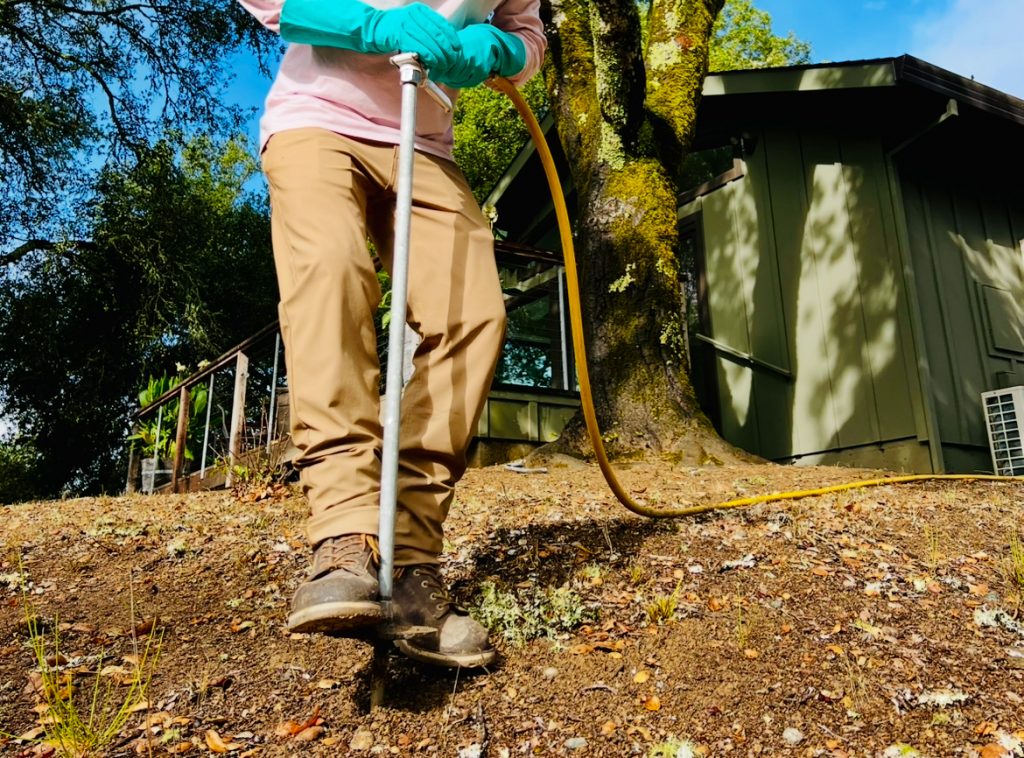
This is a common time for deep root fertilization treatments, which inject nutrients directly into the root zone where trees can absorb them more efficiently.
Fall Fertilization (September – November)
Fall fertilization is equally important for long-term tree health.
As temperatures cool and soil moisture increases, trees shift energy toward root growth and nutrient storage.
Fertilizing in fall helps trees:
- Build reserves for winter
- Strengthen roots
- Improve resilience for the following growing season
For many East Bay properties, fall fertilization can also help trees recover from summer drought stress and heat exposure.
Why Summer Fertilization Is Usually Limited
In the East Bay, summers are typically hot and dry.
Applying fertilizer during extreme heat can be less effective because:
- Trees may be in stress mode
- Soil moisture may be limited
- Nutrient uptake slows down
Instead, summer tree care often focuses on:
- Irrigation management
- Pest monitoring
- Stress mitigation treatments
Once temperatures cool in fall, fertilization becomes much more beneficial again.
How Deep Root Fertilization Works
Deep root fertilization is one of the most effective ways to deliver nutrients to mature trees.
Instead of applying fertilizer at the surface, arborists inject nutrients directly into the soil around the root zone 6-8 inches deep.
This method helps:
- Improve soil structure
- Increase oxygen in compacted soils
- Deliver nutrients where roots can absorb them
- Strengthen tree resilience to pests and drought
Deep root fertilization is commonly recommended when trees show signs such as:
- Yellowing or chlorotic leaves
- Thinning foliage
- Stunted growth
- Stress from construction or soil compaction
Which Trees Benefit Most From Fertilization?
With drought conditions still persisting it is best to have the trees evaluated for stress to determine which soil program may be needed depending on the situation.
Common East Bay trees that may benefit from fertilization include:
- Coast live oak
- Valley oak
- Sycamore
- Monterey pine
- Hackberry
- Fruit and citrus trees
- Crape myrtle
Trees growing in urban landscapes with limited soil volume often benefit the most.
Signs Your Trees May Need Fertilization
You might consider a fertilization program if you notice:
- Pale or yellow leaves
- Reduced leaf size
- Slow canopy growth
- Early leaf drop
- Thinning canopy
- Increased pest activity
However, fertilization should never be a guess.
A professional arborist assessment helps determine whether nutrients, soil improvement, or other treatments are the right solution.
Fertilization Is Only One Part of Tree Health
Healthy trees depend on more than fertilizer.
Long-term tree care may also include:
- Soil decompaction
- Vertical mulching
- Pest monitoring
- Disease management
- Growth regulators
- Proper pruning
These practices are often combined within a Plant Health Care (PHC) program designed to support tree health over time.
FAQ: Tree Fertilization in the East Bay
How often should trees be fertilized?
Most mature trees benefit from fertilization once per year, typically in spring or fall. Some stressed trees may benefit from additional treatments.
Can fertilizing trees help prevent pests?
Fertilization does not eliminate pests, but it improves overall tree health, which helps trees tolerate insect pressure and environmental stress.
Is deep root fertilization better than surface fertilizer?
For mature trees, deep root fertilization is often more effective because nutrients are placed directly into the root zone instead of sitting on the soil surface.
Can you fertilize oak trees?
Yes. Oaks in urban environments may benefit from fertilization, especially when growing in compacted soils or areas affected by drought.
What happens if trees are fertilized at the wrong time?
Fertilizing during extreme heat or when trees are dormant may limit nutrient uptake and reduce the effectiveness of the treatment.
Schedule a Tree Fertilization Consultation
If your trees look stressed or you want to improve long-term tree health, a professional evaluation can help determine the right timing and treatment plan.
Evergreen Tree Care has been serving Contra Costa County for over 40 years, providing expert tree care for residential, commercial, and municipal properties across the East Bay.Contact us today at 925-825-8165 to schedule your consultation.